FSC factors as of September 2026 · URCS Phase III + carrier-published mileage FSC
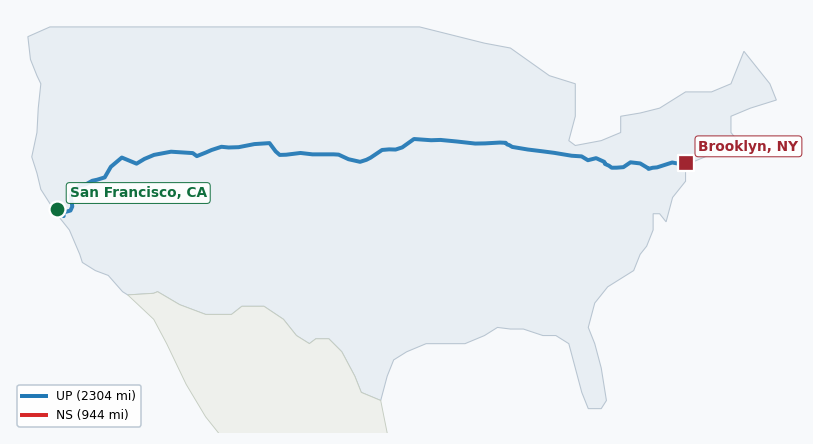
Rail route · 3,193 mi · BNSF → CFE → CSAO → CSXT → IHB → JPBX → LI → NJT → NS → NYNJ → UP
The San Francisco, CA-Brooklyn, NY rail corridor for coal primarily involves BNSF Railway, which plays a crucial role in transporting coal across this significant route. This corridor facilitates the movement of coal from western mines to eastern markets, supporting energy production and industrial needs. Notably, the interchange with CSX in Chicago serves as a key routing point, enhancing connectivity between the western and eastern rail networks.
| Segment | Carrier | Miles | Line-Haul | Fuel Surcharge | Total |
|---|---|---|---|---|---|
| Starting segment | UP | 2,314 | $6,687 | $1,550 | $8,237 |
| Ending segment | NS | 879 | $2,541 | $651 | $3,192 |
| Interchange fee (1 interchange) | — | — | — | $250 | |
| Estimated Tariff Total | 3,193 | $9,228 | $2,201 | $11,679 | |
Tweak weight, car type, or year and see how the rate moves. Or talk to us about your real shipment — we coordinate carload and unit-train moves for coal and other bulk commodities.
Other coal corridors near this route.
Steel Wheel Logistics does not publish transit times for this corridor. Actual transit depends on car supply, interchange dwell, switching at origin and destination, and any required transload. When we set up a lane we obtain the serving railroad's current service plan and share it with you before the first load.
Each Class I publishes a mileage-based fuel surcharge (FSC) tied to the EIA highway-diesel fuel index. BNSF and any participating carriers each apply their own published cents-per-mile factor to the miles they handle. FSC totals on this lane re-derive monthly as fuel prices move; the figure shown is current as of the date stamped in the hero card above.
Yes. We coordinate coal rail freight on single-line and interline routings across the U.S. Class I network, working directly with the carriers and any required short-line or transload partners. Contact us for a discussion of your specific shipment. The figures on this page are indicative estimates; every move is priced after lane and equipment review.
Coal typically moves in open-top hopper equipment. Actual car selection depends on the specific product spec, packaging, loading and unloading conditions at origin and destination, and current car-supply on the chosen carrier. We help shippers source the right equipment as part of the lane setup.
At 3,193 rail miles, rail typically wins on bulk moves at this distance — rail's per-ton-mile cost compresses sharply above ~500 miles and even more sharply at unit-train volumes. Use our rail-vs-truck comparison tool to model specific volumes side-by-side, and remember to account for transload, the truck leg at each end, and demurrage on the rail side.